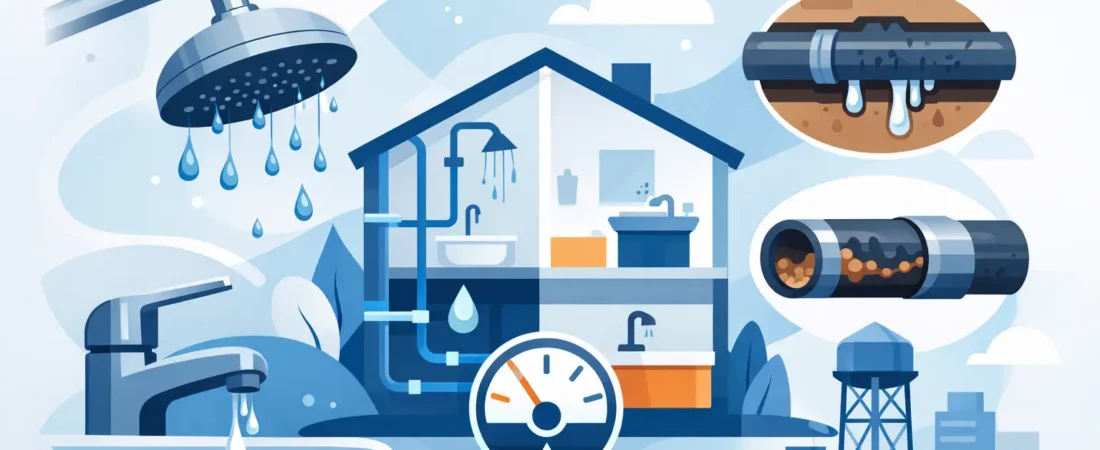
A shower that turns from refreshing to frustrating when someone runs a tap is more than an everyday annoyance. Low flow can make washing up take longer, leave a washing machine struggling to fill and, in some cases, point to a leak or plumbing fault that needs attention. If you are asking what causes low water pressure, the first useful clue is whether it affects one outlet or the whole property.
A single weak tap often has a straightforward local cause. Weak pressure throughout the house can be related to the incoming supply, a valve, pipework or a fault with the heating and hot-water system. Knowing the difference helps you avoid replacing a shower head when the real issue is elsewhere.
First, check whether it is pressure or flow
People commonly use the term “water pressure” to describe any weak stream of water, but pressure and flow are not quite the same. Pressure is the force pushing water through the pipes. Flow is the amount of water that actually reaches the tap or shower. A blockage can reduce flow even where the supply pressure is perfectly acceptable.
Try the cold tap in the kitchen, then compare it with the bathroom basin, shower and hot taps. Take note of whether the problem is constant or only happens at busy times of day. If one fitting is affected, the fitting itself is a likely starting point. If every cold tap is weak, the cause is more likely to be further back in the system.
What causes low water pressure at one tap or shower?
When low pressure is limited to a single tap, shower or appliance, the fault is usually nearby and often easier to resolve.
A blocked aerator or shower head
Many taps have an aerator on the end of the spout. It mixes air into the water stream and can collect limescale, grit and small pieces of debris over time. In hard-water parts of London, this is a particularly common cause of a weak or uneven flow.
A shower head can become similarly restricted. Remove it only if you can do so without forcing the fitting, then check for visible scale. Cleaning may help, but a badly scaled or worn shower head may need replacing. If only one tap has poor flow, cleaning the aerator is usually a sensible first check.
A partly closed isolation valve
Small service valves are often fitted beneath sinks, behind toilets or near appliances. They allow an individual water supply to be isolated for repairs. If one has been left partly closed after previous work, it can significantly reduce the flow to that fixture.
These valves can be delicate, especially in older properties. Turning a stiff valve without care can cause a leak, so it is better not to force it. A plumber can check the valve and replace it where necessary.
A fault in the tap or shower valve
Older tap cartridges, mixer valves and thermostatic shower valves can wear out or become blocked internally. You may notice a poor flow on hot only, cold only, or a shower that changes temperature when another tap is used.
The right repair depends on the model and the age of the fitting. Sometimes a replacement cartridge is worthwhile; in other cases, fitting a new tap or shower valve is the more reliable option.
Causes of low water pressure throughout the house
If several outlets are weak, look beyond the individual taps. This is where a careful diagnosis matters, as the answer depends on how your home receives and stores water.
The incoming mains supply
A temporary drop in mains pressure can affect a street or local area. It may happen during water-company works, after a burst main or at times when local demand is high. Ask a neighbour whether they have noticed the same issue. If they have, the problem may be outside your property rather than within your plumbing.
If the issue has started suddenly, check for any local supply notices before arranging internal work. If neighbours have normal pressure, your own stopcock, supply pipe or plumbing system needs closer inspection.
The main stopcock is not fully open
The internal stopcock controls the mains water entering the property. It is often found under the kitchen sink, in a utility area, by the front door or near the water meter. A stopcock that is partly closed can restrict every cold outlet.
It is useful to know where yours is before an emergency, but do not repeatedly turn an old, seized stopcock. A worn valve can begin to drip when disturbed. If it will not move easily or leaks afterwards, arrange for a professional to assess it.
A leak in the supply pipe or internal pipework
Leaks do not always show themselves as a patch on the ceiling. A hidden leak can reduce pressure while wasting a surprising amount of water. Warning signs include an unexplained rise in your water bill, damp areas, the sound of water moving when nothing is running, or a water meter that continues to register use after all taps and appliances are off.
A leaking pipe requires prompt attention. Apart from the loss of pressure, water can damage floors, walls and neighbouring properties in a flat. If you see active leaking or water close to electrical fittings, turn off the water supply if it is safe to do so and seek urgent help.
Corroded or restricted pipework
Older metal pipes can corrode internally over many years. Mineral build-up and debris reduce the available space for water to pass through, which can lead to gradually worsening flow. This may affect only certain parts of the house, particularly an older extension or bathroom served by a separate run of pipework.
There is no universal quick fix for restricted pipes. Flushing may remove loose debris in limited cases, but badly corroded sections often need replacing. A proper inspection prevents money being spent on surface-level fixes that do not address the restriction.
Why is the hot water pressure lower than the cold?
A difference between hot and cold water is a valuable diagnostic clue. In homes with a combi boiler, weak hot water but normal cold water can be caused by a blocked filter, a scaled heat exchanger, a partly closed valve or an issue inside the boiler. Boiler work should be carried out by an appropriately qualified Gas Safe engineer.
Properties with a hot-water cylinder and cold-water storage tank work differently. The pressure at taps supplied by gravity depends partly on the height of the tank above them. A loft conversion or a new shower installed above the usual tank level may therefore have naturally weak flow unless the system has been designed to support it.
A pump can improve flow in the right setup, but it is not always the answer. Pumps need suitable pipework, electrical provision and adequate water supply. Installing one to mask a blockage, failing valve or unsuitable shower arrangement can create more problems than it solves.
Simple checks you can make safely
Before booking a repair, a few observations can make diagnosis faster. Check whether cold and hot water are both affected, whether the problem is at one outlet or all of them, and whether it began suddenly or gradually. Look for obvious limescale on tap ends and shower heads, and ask nearby neighbours if their pressure has changed too.
Avoid taking apart concealed pipework, boiler components or electrical shower units. Do not use chemicals in an attempt to clear plumbing pipes, and do not force stuck valves. A small issue can quickly become a leak if an old fitting breaks during DIY work.
When to call for plumbing help
Arrange a professional assessment if pressure has dropped suddenly across the property, you suspect a leak, taps are dripping after a valve has been touched, or your hot-water system is behaving unpredictably. It is also worth getting help where poor pressure has been ongoing, particularly before fitting a new shower, appliance or bathroom suite.
A plumber can test the supply, inspect valves and fittings, identify restrictions and explain whether a repair, replacement or wider upgrade is the sensible route. For homeowners and landlords who need clear, practical help with household plumbing, Handy House can assess the issue and carry out repairs with care.
Low water pressure is rarely something you need to simply put up with. A clear picture of where and when it happens is often the quickest route to the right repair – and to getting your taps and shower working as they should.