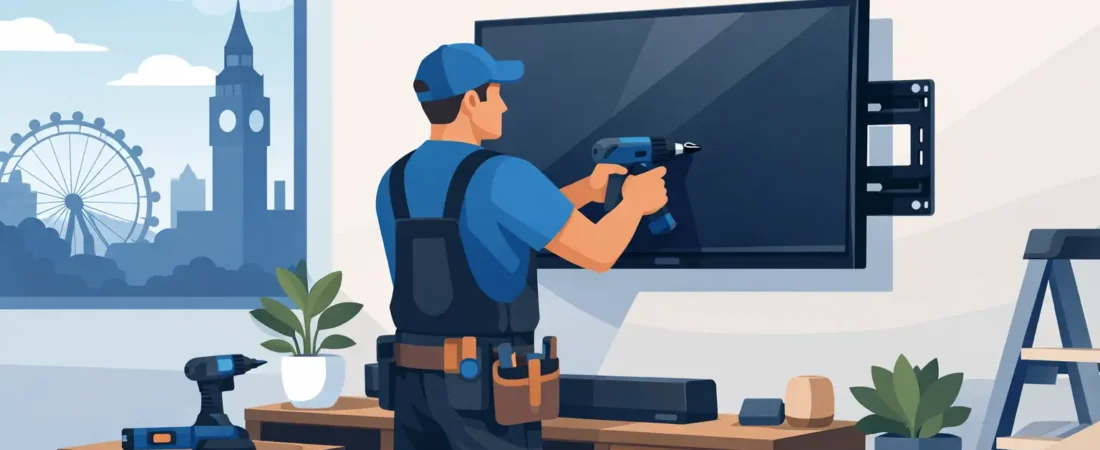
A television balanced on a cabinet can make a room feel crowded, particularly in London flats where every bit of floor space matters. Professional TV wall mounting London gives the screen a secure, tidy position and can make the room easier to use. The best result is not simply a TV fixed high on a wall. It is a carefully planned installation that suits the wall, the room and how you watch.
Why the wall matters as much as the television
Modern televisions may be slim, but they are still heavy enough to need the right support. The bracket, fixings and wall construction must all work together. A mounting job that looks fine on the day can become unsafe if the wrong plugs or screws have been used, or if the bracket has been attached only to weak plasterboard.
Solid brick and block walls usually offer a strong fixing point, although drilling still needs care. Many London homes also have plasterboard partition walls, dot-and-dab walls, older lath-and-plaster surfaces or stud walls. Each needs a different approach. With a stud wall, the strongest fixing is normally into suitable timber or metal studs, rather than relying on the board alone.
This is why an installer should assess the wall before choosing fixings. It may be possible to mount the TV exactly where you want it, but occasionally the safest position is a few centimetres away, where there is proper support. That small compromise is preferable to a loose bracket or damaged wall later on.
Choosing the right position for TV wall mounting London
The ideal position depends on the size of the screen, the seating layout and the room’s natural light. A TV mounted too high can cause an uncomfortable viewing angle, especially during a film or a long evening of sport. In most living rooms, the centre of the screen should sit close to seated eye level. Larger screens and reclining sofas can change that calculation, so there is no single measurement that suits every home.
Before fitting, consider where people normally sit and whether sunlight reaches the screen at certain times of day. A wall opposite a large window may create glare, while a bracket with a tilt function can improve the view if the screen has to be positioned slightly higher than ideal.
Corner mounting can be useful in compact rooms, but it takes more planning. The wall needs enough strength, and the viewing angle should still work from the main seating area. In bedrooms, a full-motion bracket may be helpful where the bed is not directly opposite the wall. These brackets allow the TV to move, but the moving arm also puts extra force on the fixings, making proper installation even more important.
Above a fireplace: attractive, but not always practical
Mounting a television above a fireplace can create a clean focal point, particularly where there is limited wall space. It is not automatically the best choice, however. The screen may end up too high for comfortable viewing, and a working fireplace can introduce heat that is unsuitable for the television.
The wall construction also needs checking. Chimney breasts can contain uneven brickwork, flues and hidden features that make drilling more complicated. If the fireplace is decorative only, the location may be workable. If it is in regular use, assess heat, height and access to cables before committing to the position.
Brackets, screen size and weight limits
A good bracket should be compatible with the television’s mounting pattern, often referred to as VESA measurements, and rated for the screen’s weight. These details are not interchangeable. A bracket that physically fits the back of a TV is not necessarily suitable for its size or load.
Fixed brackets keep the screen close to the wall and give the neatest profile. Tilt brackets are useful where the TV is mounted a little higher, helping to reduce reflections and improve the viewing angle. Full-motion brackets allow the screen to swivel and extend, which is helpful in open-plan rooms or bedrooms, but they require more clearance and a particularly secure fixing point.
It is also worth considering access after installation. If the bracket holds the TV very close to the wall, connecting a new games console, changing an HDMI cable or reaching the aerial input can become awkward. A thoughtful installation leaves enough room to manage the connections without placing strain on cables.
Planning cables before the bracket goes up
A wall-mounted television can look smart, but trailing leads quickly spoil the effect. Plan the power, aerial and device cables before the screen is fitted. This includes HDMI leads for a soundbar, satellite box, streaming device or games console, as well as Ethernet cables where a wired internet connection is preferred.
There are several ways to achieve a tidy finish. Surface trunking is practical and can be painted to blend with the wall. Where suitable, cables may be routed more discreetly, but this must be considered alongside the wall type and the location of electrical wiring. Power cables should never be squeezed, damaged or hidden in a way that makes them unsafe or difficult to inspect.
If a new socket or electrical alteration is required, it should be completed properly by a competent electrician. Do not assume that an extension lead hidden behind the TV is a long-term answer. Safe electrical work is part of a neat installation, not an optional extra.
Think about the equipment below the screen
A television may be on the wall, but most homes still need somewhere for connected equipment. A soundbar, router, console or media box needs power, ventilation and sensible cable routes. A floating shelf or low unit can keep the area organised, but it should not block access to sockets or cover ventilation openings.
If you are fitting a soundbar below the TV, check that the screen will not obstruct it and that the soundbar does not cover the lower edge of the picture. Small details such as this are easier to resolve before drilling begins.
What a careful installation should include
A reliable TV mounting service is about more than putting a bracket on a wall. The work should begin with confirming the screen size, bracket type, preferred position and wall construction. The installer should then check for likely hidden services before drilling, use suitable fixings and make sure the bracket is level.
Once the television is mounted, it should sit securely with no unwanted movement. Cables need to be connected without tight bends or tension, and the screen should be tested before the job is finished. The room should be left tidy, with drilling dust and packaging cleared away.
For tenants, permission from the landlord or managing agent may be needed before drilling into walls. It is sensible to confirm this in writing, especially in managed blocks or newly built flats. Landlords and property managers should also consider how easily the installation can be removed or adapted for future occupants.
When it is worth calling a professional
Some small screens on straightforward solid walls may seem like a simple DIY task. Even then, a misplaced hole, cracked plaster or damaged cable can create more work than expected. Professional help is particularly worthwhile for large televisions, full-motion brackets, plasterboard walls, above-fireplace positions, concealed cable plans and any work near electrical points.
Handy House can help London homeowners, landlords and busy households arrange careful TV mounting alongside other practical home repairs and upgrades. Having one dependable contact is useful when the job also involves decorating touch-ups, shelving, minor repairs or electrical work.
Before booking, have the TV model or size, the bracket type and a photo of the proposed wall ready if possible. It helps establish what is needed and whether any extra preparation is likely. A well-mounted TV should feel like it has always belonged in the room: secure, comfortable to watch and free from the clutter that made the change necessary.