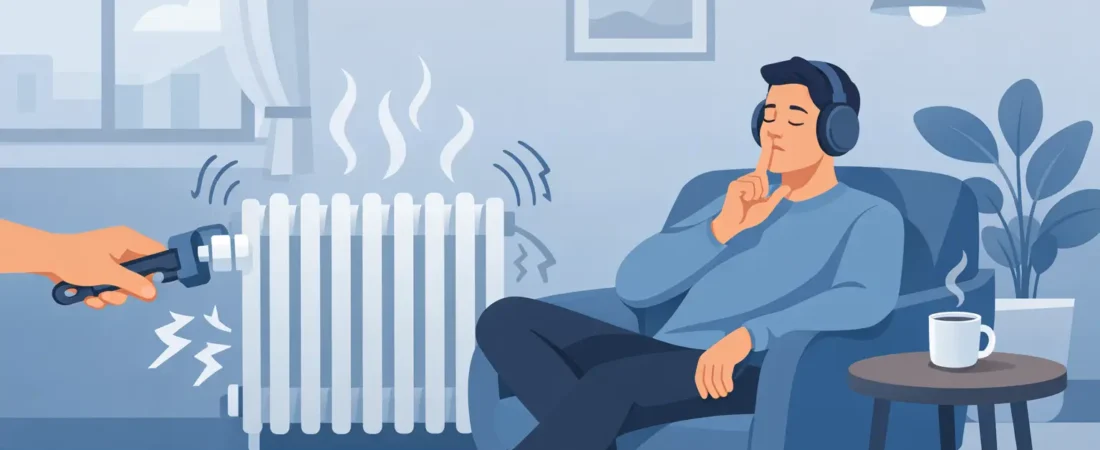
A radiator that clicks all evening, gurgles when the heating starts or bangs loudly at night can make an otherwise comfortable home feel unsettled. Knowing how to silence noisy radiators starts with identifying the sound properly. Some noises are harmless signs of metal warming up, while others point to trapped air, poor water flow or a fault that needs attention.
Before reaching for a tool, listen to when and where the noise happens. Is it one radiator or several? Does it begin only when the heating comes on, or continue after it has switched off? Those small details help narrow down the cause and avoid unnecessary work.
How to silence noisy radiators by identifying the sound
Radiators and heating pipes expand as hot water moves through them, so a light ticking or clicking can be normal. A repeated loud knock, persistent gurgling or high-pitched whistle is less likely to settle on its own.
A ticking noise often comes from pipes rubbing against floorboards, wall openings or radiator brackets as they heat and cool. This can be more noticeable in older London homes, where pipework may run through tight spaces beneath floors or behind boxing. If the noise is mild and only lasts a few minutes, it may not need repair. If it is loud or frequent, the pipework may need adjusting or protecting where it passes through a surface.
Gurgling usually suggests air has collected inside the radiator. Air stops hot water circulating evenly, often leaving the top of the radiator cooler than the bottom. Banging or clunking can indicate a faster change in water pressure or flow, loose pipework, a sticking valve or an issue elsewhere in the heating system. Whistling is commonly linked to water being forced through a valve too quickly.
Start with a few safe checks
Turn the heating on and allow the system to warm up. Carefully check whether the noisy radiator is heating evenly. Do not touch exposed hot pipework with bare hands. Instead, hold your hand close to the radiator to compare the temperature at the top, middle and bottom.
If the top is noticeably cooler, trapped air is the most likely issue. If the bottom is cold while the top is warm, the radiator may contain sludge or debris. That is a different job: bleeding will not remove sludge, and repeated attempts can reduce the pressure in a sealed system without fixing the underlying problem.
Also check that furniture, radiator covers or curtains are not pressing against the radiator or its pipes. A loose radiator cover can vibrate and sound like a plumbing fault. Make sure the brackets are secure and that nothing is resting against the valves.
If one radiator whistles after you adjust its temperature control, turn the thermostatic radiator valve down slightly. A valve that is fully open can sometimes create noise where water flow is high. If reducing the setting quietens it, the system may benefit from balancing rather than a replacement valve.
Bleed a gurgling radiator carefully
Bleeding is a straightforward task for many homeowners, but it should be done carefully. Switch the heating off and wait for radiators to cool. This prevents hot water from escaping and gives air time to collect at the top of the radiator.
Place a cloth and a small container beneath the bleed valve, usually found at the top corner. Use a radiator key or suitable bleed key to open the valve slowly – usually no more than a quarter turn. You should hear a faint hiss as air escapes. Once water begins to trickle out steadily, close the valve firmly but do not overtighten it.
After bleeding, check the boiler pressure if you have a sealed central heating system. The pressure can drop when air and water are released. Your boiler manual will show the recommended cold pressure range and how to top it up if needed. If you are not confident doing this, or the pressure repeatedly falls, arrange a qualified heating professional to investigate.
For tenants, it is sensible to check your tenancy agreement or speak to the landlord or managing agent before carrying out maintenance. Many landlords prefer to arrange heating repairs themselves, particularly where the boiler pressure needs restoring.
When noisy radiators need more than bleeding
A radiator that continues gurgling soon after bleeding may have a larger issue with circulation, pressure or air entering the system. A radiator that stays cold at the bottom may need cleaning internally, sometimes called a power flush or system clean. The right option depends on the condition and age of the system. A full clean is not always necessary for one affected radiator, but it can be worthwhile where several radiators heat poorly or the system has dirty water.
Banging pipes deserve particular attention. Pipes should have room to expand, but they should also be supported securely. Where pipework is tightly held in timber, metal clips or a hole through a wall, it can scrape or knock as temperatures change. Access may require lifting floorboards or opening a boxed-in section, so this is often best left to a professional who can locate the pipe safely and make a neat repair.
A banging noise may also be caused by an incorrectly set pump, badly balanced radiators or a sticking thermostatic valve pin. Balancing means adjusting the valves across the home so hot water reaches each radiator at a more even rate. It can improve comfort as well as reduce flow noise, but it takes patience and a methodical approach. Turning every valve fully open is rarely the answer.
Check valves without forcing them
If a radiator is cold, noisy or slow to respond, look at both valves at its base. One may be a thermostatic radiator valve with numbers or a frost symbol; the other is usually a plain lockshield valve, often hidden beneath a plastic cap.
Try moving the thermostatic valve through its settings. If it feels stuck, do not force it. The small pin beneath the valve head can seize, particularly after a long period without use. Forcing parts can damage the valve or create a leak. A plumber can free or replace the valve and check whether the radiator is receiving the correct flow.
Avoid adjusting lockshield valves at random. Their position affects the balance of the whole heating system. If you do move one while investigating, take a photo first or count the turns so it can be returned to its original position.
Signs you should arrange professional help
Some radiator noise is inconvenient rather than urgent. However, book a qualified professional promptly if you notice water around a valve, a drop in boiler pressure, brown or black water when bleeding, repeated cold spots, or loud banging that affects several radiators. These signs can point to corrosion, sludge, circulation problems or a leak.
If there is a smell of gas, do not try to diagnose the heating system yourself. Turn off the gas supply only if it is safe to do so, avoid electrical switches and flames, open doors and windows, leave the property, then contact the emergency gas service. Gas concerns need immediate specialist attention.
For plumbing-related radiator issues, a reliable local repair service can inspect the valves, brackets, pipework and radiator condition, then explain what work is genuinely needed. Handy House can help homeowners and property managers with practical radiator and plumbing repairs, without leaving you to coordinate several different trades.
A quiet radiator should heat the room without demanding your attention. If a simple bleed does not solve the sound, dealing with the cause early can protect your comfort, prevent a small fault becoming a leak and make the heating work more efficiently when you need it most.