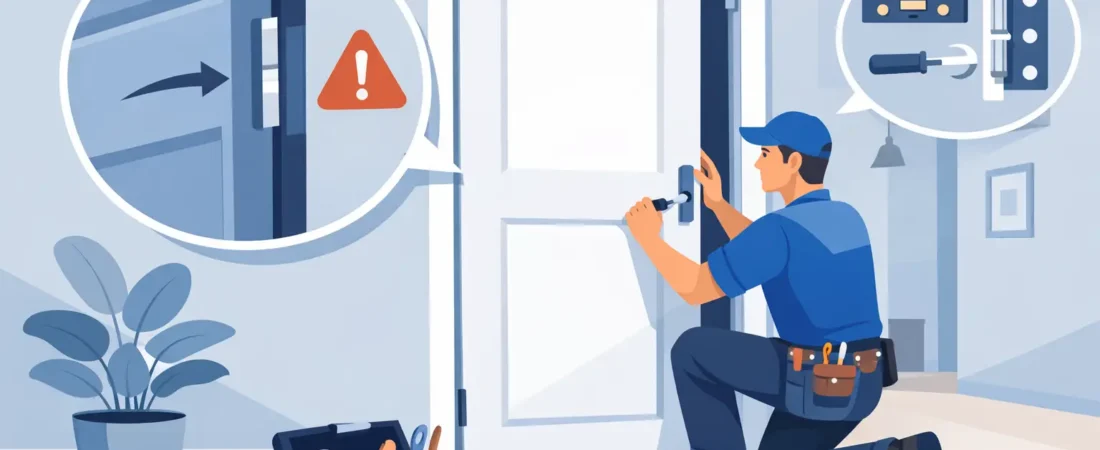
A door that suddenly catches on the floor, needs a hard push to close or leaves a gap around the frame can quickly become more than a minor irritation. A professional door alignment repair service identifies why the door has moved and restores a smooth, secure fit without creating further damage to the door, frame or fittings.
For busy households, landlords and property managers, this is the sort of repair that is easy to put off. Yet forcing a misaligned door day after day can loosen hinges, mark flooring, strain locks and make a simple adjustment more involved. Acting early is usually the tidiest and most cost-effective approach.
Signs your door is out of alignment
Door alignment problems are not always obvious at first. You may notice that the latch no longer catches cleanly, the door rubs at the top or bottom, or it swings open on its own rather than staying where you leave it. Exterior doors may feel draughty, admit rain around the edges or become difficult to lock.
Look closely at the gaps around the door when it is shut. A reasonably even gap is normally a good sign. A large gap on one side, a tight pinch point at the top, or a door that sits lower than it used to can point to movement in the hinges, frame or property itself.
A scraping sound on carpet or timber flooring deserves attention too. It may be tempting to keep lifting the handle or forcing the door past the obstruction, but this can damage the edge of the door and leave marks that are harder to put right later.
Why doors move over time
Doors are constantly working. They carry their own weight, respond to changes in temperature and humidity, and are opened and closed many times each day. Small changes can add up, particularly in older London homes where original frames and floors may already have settled over many years.
Loose or worn hinges are a common cause. The screws may no longer grip firmly in the door or frame, allowing the door to drop slightly. Sometimes the hinges themselves are worn, bent or unsuitable for the weight of the door.
Moisture can also affect timber. A bathroom door may swell after repeated exposure to steam, while an external timber door can expand during wet weather. This does not automatically mean the door needs replacing. It may need an adjustment, careful easing at a rubbing edge, better sealing or a review of the source of damp.
Frames can move as well. Seasonal movement, worn fixings, previous repairs and gradual settlement may alter the shape of an opening. With uPVC and composite doors, alignment can be affected by hinges, keeps, locks or the door panel position. These systems need a measured approach, as an adjustment in one area can affect how the handle and lock operate.
What a door alignment repair service should check
The right repair starts with finding the cause, not simply shaving a little material from the door. Trimming can be useful in the right situation, but it is not a cure for loose hinges, a damaged frame or an underlying moisture issue.
A careful assessment should consider the door’s position within the frame, hinge condition, fixings, latch and strike plate alignment, lock operation, seals and any signs of swelling or impact damage. On an external door, security matters just as much as ease of use. A door should close properly, allow the lock to engage as intended and sit securely against its seals.
The work may involve tightening or replacing screws, packing or adjusting hinges, repositioning a strike plate, easing a binding edge, repairing minor timber damage or making small adjustments to associated fittings. If the door has become badly warped, water damaged or structurally unsound, replacement may be the more sensible long-term option. A straightforward repair is preferable where it will last, but not where it only hides a bigger problem.
Internal doors and external doors need different care
Internal doors are often affected by loose hinges, carpet changes, floor movement or timber swelling. The priority is usually smooth operation, a tidy finish and preventing further wear to the door, frame and flooring. Privacy doors also need to latch reliably, especially for bathrooms, bedrooms and home offices.
External doors require additional checks. A poorly aligned front or back door can affect security, weather protection and energy efficiency. If a lock is difficult to turn, the key needs jiggling, or the handle must be lifted or pulled firmly to lock the door, do not ignore it. Repeated force can wear components and leave you unable to secure the property properly.
Patio, French and bi-fold doors have their own moving parts and tolerances. Problems may come from tracks, rollers, hinges, glazing, seals or the fitting of the doors themselves. These doors can be heavier than they appear, so adjustment should be handled with care to avoid damage or injury.
When a small adjustment is enough – and when it is not
A loose hinge screw can sometimes be an uncomplicated fix. If you are confident with basic DIY, tightening an obviously loose screw may help. However, take care not to overtighten or strip the fixing. If the screw turns without gripping, the timber is damaged, or the door remains out of position, it is time to stop and arrange professional help.
Avoid planing or sanding a door before understanding why it is catching. Removing too much material can create uneven gaps, expose unfinished timber and reduce weather protection on an external door. It may also make the door unsuitable once conditions become drier and the timber contracts again.
Call for assistance promptly if an external door will not lock, a fire door does not close fully, the frame is visibly split, the door has dropped heavily, or there are signs of water damage. Fire doors in particular must close correctly and should not be altered casually. The same applies where a door is connected to electrical access systems, alarms or specialist locking hardware.
Preparing for a door alignment repair visit
A little information helps the repair go smoothly. Make a note of when the issue began and whether it is worse in damp or cold weather. If the problem affects an external door, explain whether it is difficult to lock, draughty or letting in water. For a tenancy or managed property, confirm any access arrangements and whether permission is needed for repairs.
Clear shoes, coats, furniture and other items from the immediate area so the door can be opened fully and checked safely. If the door catches on a rug or a newly fitted floor covering, mention this from the outset. It may be relevant to the adjustment needed.
Photos can be useful when arranging a visit, especially where there is visible damage, a gap around the door or a problem with the lock. They do not replace an on-site inspection, but they can help communicate the issue clearly.
Preventing repeat alignment problems
Once the door is working properly, gentle use and occasional checks can help keep it that way. Do not hang heavy bags or organisers from door handles, as the extra load can pull on hinges and strain fittings. Keep exterior door drainage channels and thresholds clear of leaves and dirt, particularly after wet weather.
For timber external doors, maintain paint, varnish or other protective finishes. Peeling coatings allow moisture into the wood and can lead to swelling or deterioration. In bathrooms and kitchens, good ventilation reduces the moisture that can affect timber doors and frames.
It is also worth dealing with a sticking latch or dragging edge before it becomes routine. A door that closes easily is safer, quieter and less likely to damage its fittings. Handy House can help with practical door repairs as part of wider household maintenance, whether the job is a single troublesome door or several small repairs that need completing at the same time.
A door should not need a shoulder, a sharp pull or a carefully timed lift to work properly. Getting the alignment checked early brings back that simple, reliable close every home needs.