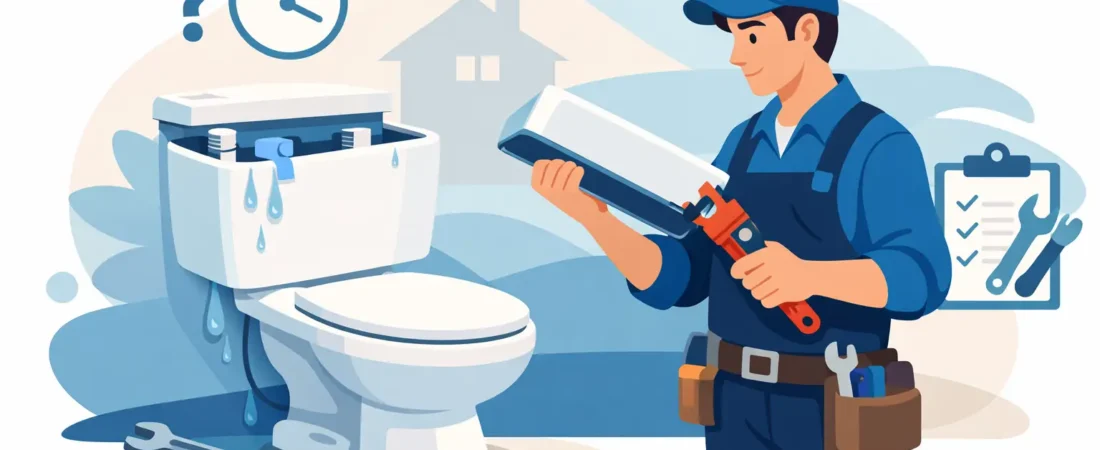
A toilet that keeps running after it has been flushed can waste far more water than most households realise. A toilet cistern repair service is often the quickest way to stop the noise, protect your bathroom from leaks and get a frequently used fixture working properly again. Whether the issue is in a family home, rented flat or managed property, a small cistern fault deserves prompt attention.
Signs your toilet cistern needs repairing
Not every cistern problem looks dramatic. Some faults develop slowly, with a faint trickle into the pan or a flush that becomes less reliable over time. Others are obvious straight away, such as water spilling from the cistern or a flush button that will not respond.
A constantly running toilet is one of the most common signs. Once the cistern has refilled, the water should stop. If it continues to flow into the bowl, the internal valve may not be closing correctly or the overflow level may be set too high. Besides being irritating, this can add unnecessary cost to water bills.
A weak or incomplete flush can point to a problem with the flush valve, handle, button mechanism or the amount of water entering the cistern. You may also find that the toilet needs two flushes, the button sticks down, or the handle feels loose. These are practical faults, but they can make a bathroom inconvenient for everyone using it.
Water around the base of the toilet, beneath the cistern or on a nearby wall should never be ignored. It may come from a loose connection, a worn seal or condensation, and the cause needs to be identified before damage spreads to flooring, cabinets or ceilings below. If water is actively leaking, turn off the toilet’s isolation valve where possible and arrange help without delay.
What a toilet cistern repair service involves
A proper repair starts with finding the source of the fault rather than replacing parts at random. The cistern may need to be opened, the water supply checked and the flushing components tested. This allows the repair to focus on the part that has actually failed.
Common repairs include adjusting or replacing the fill valve, fitting a new flush valve or seal, repairing a faulty push button, renewing a handle mechanism, or securing a loose water connection. In older toilets, worn washers and seals can cause persistent drips. In newer dual-flush models, the internal mechanism can become misaligned, stiff or worn after regular use.
The right solution depends on the type and condition of the cistern. A straightforward internal part replacement can often restore reliable flushing. However, if several components are failing, the cistern is cracked, or suitable parts are no longer available, replacing the cistern or toilet may represent better value over time. An experienced professional should explain the options clearly before work begins.
Once the repair is complete, the toilet should be flushed more than once and checked as the cistern refills. This final testing matters. It confirms that the water stops at the correct level, the flush operates as intended and connections remain dry.
Concealed and close-coupled cisterns
Close-coupled cisterns, where the cistern sits directly on the toilet pan, are common in many London homes and are usually accessible from above. Concealed cisterns are built into a wall or furniture unit and can be more involved. Access is often through the flush plate, but the available space and model of the mechanism affect what can be repaired.
A concealed cistern does not automatically mean that tiles or wall panels need to be removed. Many faults can be addressed through the access opening. Still, it is sensible to allow for a more careful assessment, particularly in older bathrooms where fittings may have been altered over the years.
Why prompt repairs save hassle later
A running cistern can waste a surprising amount of water every day. Even a light, continuous flow can become costly if it is left for weeks. More importantly, a leak hidden behind a toilet or within a boxed-in cistern can cause damage before it becomes visible.
Bathrooms are designed to cope with normal splashes, not ongoing leaks. Water can work its way under vinyl, laminate or tiled flooring, affect sealant and create damp patches in the room below. In a rented property, acting early also helps landlords and tenants avoid disputes about preventable damage.
There is a practical comfort issue too. A toilet is not a fixture most households can do without for long. Booking a repair when the first symptoms appear is generally easier and less disruptive than waiting for a complete failure at an inconvenient time.
Can you fix a cistern fault yourself?
Some basic checks are safe for confident homeowners. You can look for obvious water on the floor, check whether the cistern lid is sitting correctly and see whether the flush button or handle is catching. If you know where the isolation valve is, it is useful to make sure it can turn the water supply off in an emergency.
However, cistern mechanisms vary considerably. Forcing a plastic fitting, overtightening a connection or fitting an incompatible part can make a minor issue worse. Water inside the cistern is not usually the difficult part – the challenge is choosing the correct component and making sure everything seals and operates correctly afterwards.
It is best to arrange a professional repair when there is a persistent leak, a concealed cistern fault, water near electrical fittings, visible damage, or uncertainty about the cause. This is especially true in flats, where water damage can affect neighbours as well as your own home.
Preparing for a repair visit
A little information helps the job move along smoothly. If you can, note when the issue started and whether it happens after every flush or only occasionally. A short video of a running cistern or sticking button can also be useful when arranging the visit.
Please clear toiletries, cleaning products and storage items from around the toilet where practical. This gives safe access to the cistern and surrounding pipework. If the bathroom is shared, it may also help to mention any access restrictions or preferred times when booking.
For landlords and property managers, provide the tenant’s contact details and confirm who can approve work if additional parts are needed. Clear communication avoids delays and helps keep the repair straightforward for everyone involved.
Reliable help for toilet cistern problems in London
A cistern repair is a small job with a big effect on daily comfort, water use and peace of mind. Handy House provides practical household repairs across London and nearby counties, with careful workmanship and clear communication from the first enquiry through to completion.
If your toilet is running, leaking or no longer flushing properly, do not wait for the problem to become a damaged floor or an unusable bathroom. Share what you have noticed when you get in touch by phone, email, WhatsApp or an enquiry form, and arrange a convenient time for the fault to be assessed. A working toilet should be one less thing to worry about at home.