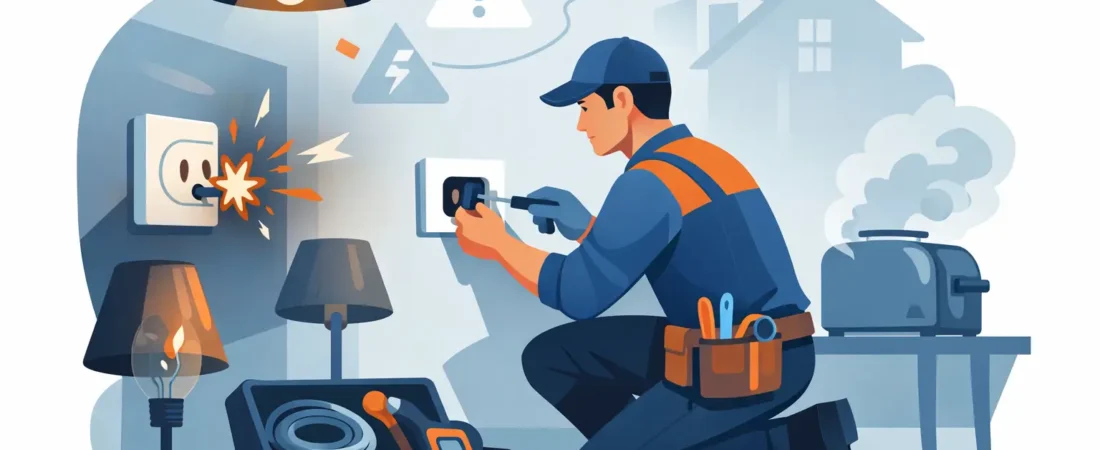
A socket that suddenly feels warm, lights that flicker when the washing machine starts, or a circuit that keeps tripping can quickly turn a normal evening at home into a concern. Domestic electrical repairs are not simply about getting power back on. They are about finding the cause safely, protecting your household and avoiding a small fault becoming a larger repair.
For homeowners, landlords and busy households, the difficulty is often knowing what needs prompt attention and what can reasonably wait for a planned visit. A sensible approach is to treat anything involving heat, burning smells, repeated power loss, exposed wiring or water as urgent. For less immediate problems, arranging a professional inspection still gives you clarity and a proper solution.
What domestic electrical repairs can include
Electrical problems do not always begin with a dramatic loss of power. A loose socket, a faulty light fitting, a worn switch or a failing extractor fan may work intermittently for weeks before it stops altogether. These smaller faults can be inconvenient, but they can also point to wear, poor connections or an issue with the circuit supplying that part of the property.
Common domestic electrical repairs include replacing damaged sockets and switches, investigating tripping circuits, repairing or replacing light fittings, resolving problems with extractor fans, replacing faulty bathroom pull cords and checking wiring affected by damage or damp. Some work is straightforward once the fault has been identified. Other jobs need more investigation, particularly in older London homes where alterations may have been carried out over many years.
The right repair depends on the condition of the existing installation, not just the visible problem. Replacing a fitting may solve the issue, but not if the wiring behind it has deteriorated. A careful assessment helps avoid paying for the same problem twice.
Warning signs that need prompt electrical attention
A consumer unit, sometimes called a fuse box, is designed to cut power when it detects a fault. Resetting a switch once after an obvious cause, such as a faulty appliance, may be enough. If it trips repeatedly, however, it is a warning that should not be ignored.
Repeatedly tripping circuits
A circuit that trips whenever you use a particular appliance, socket or light fitting needs investigating. Avoid repeatedly resetting the switch and carrying on as normal. Unplug the appliance if it is safe to do so, and do not use the affected fitting or socket until the cause is understood.
It may be an appliance fault rather than a problem with the fixed wiring, but that distinction matters. Testing and diagnosis are safer than guessing, especially where several sockets or rooms are involved.
Heat, discolouration or a burning smell
Warm plugs, scorch marks, cracked faceplates and a smell of burning plastic are all reasons to stop using the affected point. Turn off power to the relevant circuit if you can do so safely, and arrange help promptly. Do not cover the issue with furniture or try to tighten parts while the circuit is live.
These signs can result from loose connections, overloaded sockets or damaged components. The cause may be hidden behind the wall, so a cosmetic replacement alone is not always enough.
Flickering lights, buzzing and electric shocks
A bulb nearing the end of its life can flicker, but persistent flickering across several lights deserves attention. Buzzing from a socket, switch or light fitting is also not something to put up with. Neither is a tingling sensation or electric shock from an appliance or metal fitting.
Switch off and stop using the affected item where possible. Electrical faults can be unpredictable, and a quick check before the problem worsens is usually the more cost-effective choice.
Water near electrical fittings
Water and electricity should always be treated with care. A leak below a kitchen sink, moisture around a bathroom fitting or water entering a ceiling from above can affect cables, lights and connections. If there is an immediate risk, avoid touching electrical equipment in the wet area and seek help without delay.
In a property with both a plumbing leak and an electrical concern, coordinating the repair is useful. The leak needs to be stopped, but the affected electrical area also needs to be checked before it is used again.
What can wait, and what should not
Not every electrical job is an emergency. A light fitting you would like changed, an unused socket with a cracked cover, or an extractor fan that has become noisy can often be booked as routine maintenance. It is still worth dealing with these jobs before they become disruptive, particularly in bathrooms and kitchens where daily use and moisture put fittings under more strain.
The dividing line is risk. If there is heat, a smell, smoke, exposed conductors, water damage, shocks or repeated tripping, stop using the affected area and arrange urgent professional support. If the issue is mainly convenience or appearance, a planned appointment is usually suitable.
If you are unsure, describe what you have noticed when making an enquiry. Details such as when the fault began, which rooms are affected and whether a circuit has tripped can help the visit be planned properly.
A careful approach to electrical repair
Good electrical work starts with diagnosis rather than assumptions. The visible fault is not always the actual source of the problem. An experienced professional will assess the affected fitting or circuit, isolate power where required, identify the likely cause and explain the practical repair options.
Once the repair is complete, the work should be checked before the circuit is put back into normal use. This is particularly important after faults involving sockets, lighting circuits, bathroom fittings or water. Clear communication matters too. You should know what was found, what has been repaired and whether there is any sensible follow-up work to consider.
There can be trade-offs. Replacing a single worn fitting may be the right answer in a newer property with sound wiring. In an older home with several similar faults, it may make more sense to address a wider section of the installation. A trustworthy recommendation should be based on the condition of the property and the work needed, not on adding unnecessary jobs.
Electrical repairs for landlords, tenants and property managers
For landlords and small property managers, a quick response can prevent inconvenience for tenants and reduce the chance of a minor issue affecting other parts of the property. Keep a record of reported faults, especially repeated tripping, damaged sockets and bathroom extractor problems. These details make it easier to identify patterns and arrange the right repair.
Tenants should report electrical concerns early rather than attempting a repair themselves. Replacing a bulb is one thing; working on sockets, switches or wiring is another. If a fitting appears damaged or unsafe, stop using it and inform the person responsible for the property.
Properties with frequent changeovers also benefit from practical checks between occupancies. Small repairs to lights, fans, switches and sockets can be handled before a new tenant moves in, helping the home feel cared for from day one.
Reducing the need for future repairs
Most homes benefit from simple habits. Avoid overloading extension leads, do not force plugs into loose sockets, and replace damaged appliance leads rather than taping them up. In kitchens, keep leads away from hot surfaces and avoid trailing them where they can be caught in cupboard doors.
Bathrooms deserve extra attention because moisture can shorten the life of fittings. If an extractor fan is noisy, slow to clear steam or no longer working, arrange a repair rather than waiting for damp and mould to become a separate problem.
Older properties may also need occasional attention after decorating, plumbing work or general home improvements. A screw, a leak or a poorly fitted replacement can affect hidden cables and connections. Raising concerns early keeps repairs more manageable.
Choosing help you can feel comfortable inviting in
When you need domestic electrical repairs, look for clear communication as well as practical skill. You should be able to explain the issue in plain language, receive a straightforward response and understand what will happen next. Respect for your home matters too, from working carefully around family life to leaving the area tidy after the job.
Handy House has supported local households with practical repairs since 2013, combining electrical work with the wider maintenance help homes often need. Whether the issue is a faulty fitting, a recurring trip or an electrical concern alongside another household repair, dealing with it promptly gives you reassurance and helps keep your home safe to use.
A small electrical fault rarely becomes less inconvenient by being ignored. Taking action when the first signs appear gives you the best chance of a straightforward repair and a home that feels safe again.